
Your Place to Gather
The Gulf Harbors Community Center is a shared space for members, residents, organizations, and visitors. Stewarded by the Gulf Harbors Charitable Fund, it serves as a hub for connection, learning, and community engagement. Everyone is welcome to participate in none membership exclusives programs, events, and activities that bring the neighborhood together.

History of Gulf Harbors, Florida
Gulf Harbors began as an ambitious vision in the late 1950s when developers sought a prime coastal location north of Tampa Bay’s growing cities. They found it in a rocky tract known as “Devil’s Woodyard,” which they renamed Flor-A-Mar —“flower of the sea.” The goal was bold: create a waterfront community for up to 50,000 residents.
Early development faced major challenges. Unlike typical sandy Florida terrain, the land was solid rock, making canal construction extremely costly. Despite completing key infrastructure—canals, seawalls, utilities, roads, and even a golf course—high expenses and a weak housing market led to foreclosure in 1963 after minimal home sales.
In 1964, the project was rescued by the Crown family of Chicago through Empire Properties. They rebranded the community as Gulf Harbors and injected the capital needed to continue development. Under the newly formed Lindrick Corporation, leadership shifted strategy—opening the project to multiple builders and realtors—which sparked rapid growth. Home sales surged throughout the late 1960s.
By the early 1970s, Gulf Harbors had established its defining features: extensive canal systems, waterfront homes, and a private beach reserved for residents. Plans for high-rise beachfront development were abandoned in favor of preserving the shoreline for community use—a decision that helped shape the neighborhood’s character.
Growth continued alongside rising property values, particularly in waterfront areas. In 1975, the developer gifted the clubhouse and surrounding amenities to the Civic Association, marking a transition toward resident stewardship.
Environmental awareness also influenced later phases. Strict conservation laws reduced planned canal expansion, and large portions of land were preserved as protected areas, including the Robert Crown Wilderness Refuge. The adjacent Woodlands development emphasized blending homes with nature, preserving trees, and following natural land contours.
By the 1980s, Gulf Harbors had evolved into a desirable coastal community with strong property values, recreational amenities, and a balance between development and environmental preservation.
Today, Gulf Harbors reflects both the resilience of its early vision and the lasting impact of thoughtful planning, community involvement, and respect for its natural surroundings.
With thanks to Nancy Cote, Volunteer, for the research from Life on the Gulf.
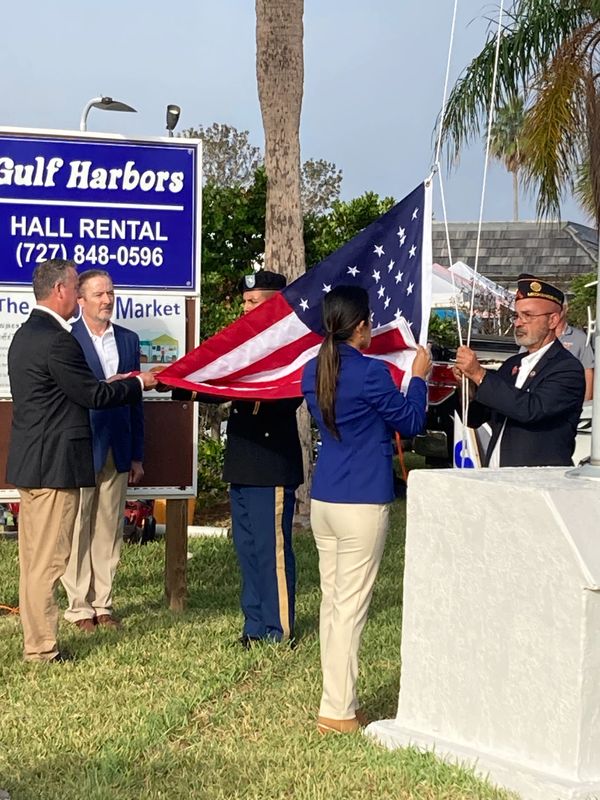
How the Center Is Used
- Civic Meetings & Hub of the Civic Association: The center hosts regular civic meetings, serving as the central hub for local governance and community planning.
- Community Events & Joint Events: From seasonal celebrations to workshops and social gatherings, the center supports events that bring people together.
- Partner Nonprofits: Local organizations use the space to run programs, support residents, and collaborate on initiatives that benefit the community.

Stewardship & Care
- Maintenance & Capital Improvements: The Gulf Harbors Charitable Fund ensures the Community Center is always safe, functional, and welcoming. Routine upkeep, repairs, and periodic upgrades keep the building in excellent condition for daily use and special events.
- Preservation for Future Generations: Careful planning and responsible stewardship protect the Community Center as a lasting asset for Gulf Harbors. By maintaining reserves, updating facilities, and safeguarding the property legally and financially, the Fund ensures this space serves residents today—and for decades to come.